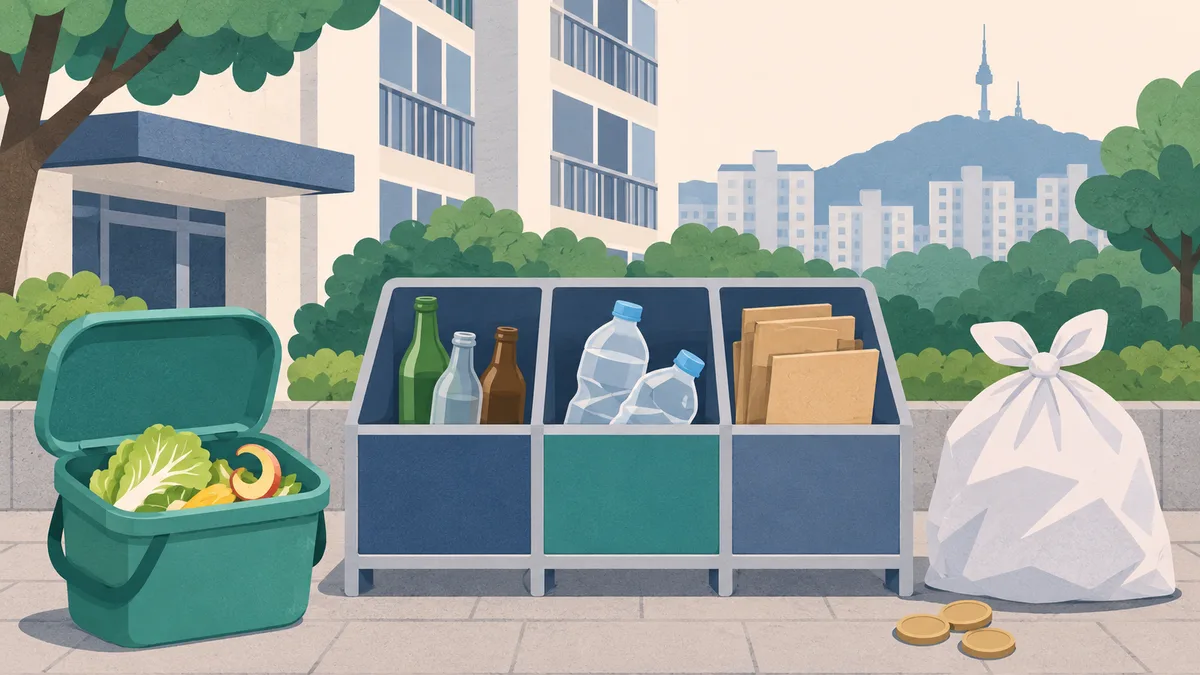
The items that must not be disposed of as food waste differ by autonomous district, which caused confusion, so Seoul improved its standard and encouraged each district to amend its rules. In Hanam, do not mix food waste and recyclable waste with general waste.
| What | Detail |
|---|---|
| Excluded food items | The items that must not be disposed of as food waste differ by autonomous district, which caused confusion, so Seoul improved its standard and encouraged each district to amend its rules |
| Seongbuk-gu | Household waste collection in Seongbuk-gu is after 7 PM on the disposal date, with some neighborhood remarks |
| Hanam City | Waste disposal hours in Hanam are 18:00 to 06:00 |
| Where to buy bags | Waste bags can be bought at supermarkets and convenience stores in Geumcheon-gu |
| Geumcheon-gu days | In Geumcheon-gu, disposal is on Sunday, Tuesday and Thursday, or Monday, Wednesday and Friday |
| Geumcheon-gu | Disposal time in Geumcheon-gu is after sunset until midnight |
How do you separate trash in Korea, and what goes in which bin?
Seoul’s citywide standard is published at Seoul Metropolitan Government food waste disposal standard for foreign residents. Objects wrongly put in food waste can break machine equipment and prevent the recycling of resources. Fully remove water and impurities such as mud and dirt before putting food waste in the designated food waste containers or bags.
Your first day in a new home: sorting before you unpack
- In Seongbuk-gu, all household waste must be put out in front of your home at the entrance on the designated disposal dates
- In Geumcheon-gu, all waste must be put out in front of the door of your house
- In Hanam, buy and attach a sticker to large waste such as home appliances and furniture before putting it out
- In Seongbuk-gu, call the cleaning service provider or report online before disposing of large waste
Contact the Seongbuk-gu Cleaning Administration Division at +82-2-2241-4400 or 4410, or the local community center. Other first-month tasks for residents are in Do foreigners living in Korea have to join the national health insurance?. For safety information on living in Korea, see How do emergency alerts and disaster safety work in Korea for visitors?. A Seoul helpline for foreign residents is covered in Seoul Dasan Call helpline: who can use it, in which languages and for what.
Food waste: what goes in the food bin and what stays out
Wash salty foods such as kimchi, soybean paste and gochujang with water before disposal.
| What | Detail |
|---|---|
| Meat hair and bones | Hair and bones of cows, pigs and chickens are not food waste under the Seoul standard |
| Egg shells | Shells of eggs, duck eggs, quail eggs and ostrich eggs are not food waste under the Seoul standard |
| Tea and herb grounds | Grounds of various teas, such as green tea, and of medicinal herbs are not food waste under the Seoul standard |
| Vegetable skins | Skins of onions, garlic, ginger and corn are not food waste under the Seoul standard |
| Hard nut and fruit shells | Hard shells of walnuts, chestnuts, peanuts, acorns, coconuts and pineapples are not food waste under the Seoul standard |
Finely chop green onion peels and large vegetables such as whole radishes, cabbages and pumpkins, because large or long pieces may break machine equipment.
Pay-as-you-throw bags and food containers by district
- In Geumcheon-gu, drain liquids fully and put food waste in the designated food waste bin using food waste plastic bags
- In Hanam, multi-unit housing residents remove moisture and foreign substances and put food waste in the shared food waste collection bin
In Seongbuk-gu, food waste goes in food waste PAYT bags, apartments use dedicated containers and small restaurants must show proof of payment. Waste bags can be bought at supermarkets and convenience stores in Geumcheon-gu.
Recyclables sorted at the door before collection
- In Hanam, remove all contaminants and foreign substances from recyclables and make sure they are recyclable
- In Seongbuk-gu, put recyclables out in transparent bags or tied with string for sorting
- In Hanam, houses collect recyclables separately by material in clear plastic bags and put them out in front of the house or store
- In Geumcheon-gu, sort recyclables by kind and put them out in transparent plastic bags
In Hanam apartment complexes, contact the management office about recyclable waste, but contact Hanam City Government for plastic and Styrofoam.
Collection days, hours and the district pages that set them
In Geumcheon-gu, disposal is on Sunday, Tuesday and Thursday, or Monday, Wednesday and Friday. In Hanam, ask the service provider in your zone about collection requests, schedules and large waste reports.
Seongbuk-gu, Hanam and Geumcheon-gu each publish their own rules, at Seongbuk-gu Office household waste disposal guide, Hanam City waste separation and disposal rules and Geumcheon-gu Office waste disposal methods, and Hanam has more at Hanam City food waste and bulky waste disposal. District office pages were last checked on 25 November 2026.
FAQ
Can I put waste out the day before a holiday in Seongbuk-gu?
Seongbuk-gu asks residents to refrain from putting household waste out on the day before public holidays, excluding Sundays.
When is recycling collected at a depot in Geumcheon-gu?
In residential zones of Doksan 4-dong, recyclables are put out between 15:00 and 21:00 on Tuesday and Friday at areas with a recycling depot.
What hours can I put waste out in Hanam?
Waste disposal hours in Hanam are 18:00 to 06:00.
Checked against Seoul Metropolitan Government food waste disposal standard for foreign residents, Seongbuk-gu Office household waste disposal guide, Hanam City waste separation and disposal rules, Hanam City food waste and bulky waste disposal, Geumcheon-gu Office waste disposal methods on 25 November 2026.